
Home About Me Resume
CASE STUDY
Intergenerational digital co-play
OCAD University · MDes, Strategic Foresight & Innovation · Collaborative Major Research Project · 2026
My role
Research collaborator · Prototype concept, design and development · Bilingual game manuals
Give both players a reason to contribute
Our project explored non-family intergenerational play in the Greater Toronto Area's Chinese community. We used consultation workshops with existing games to understand how rules, controls and roles shaped participation.
I translated that shared research into Across the Table, a two-player puzzle that divides information between a screen and a printed notebook.
Our workshops showed how unclear roles could leave one person operating and the other watching. One concrete example of my response is the calendar clue: the notebook tells its reader to use the number circled in red, while the screen player finds and describes the calendar. They combine the written rule and visual detail to identify a code digit. In the intended two-player setup, each role supplies information the other needs; this is a participation design, not a claim that the software prevents players from looking at each other’s materials.
The consultation workshops used existing games, not Across the Table. The prototype translates those findings into a design to investigate; it does not establish improved cooperation or long-term relationship outcomes. I led the prototype and bilingual manuals, with agent-assisted scripts and AI-generated placeholder artwork; the research, analysis, toolkit and report were shared with Harvey Li.
Outputs: Research report, design toolkit, Unity prototype, and English and Chinese game manuals
Research collaboration: Yang Yi and Harvey Li, OCAD University
Principal advisor: Dr. Sara Diamond
What this case covers
I led the design and development of Across the Table and its English and Chinese manuals, drawing on our shared research into intergenerational play in the Greater Toronto Area's Chinese community.
Start with how people play together
We used existing games in two consultation workshops to examine how intergenerational pairs shared control, interpreted rules and helped each other.
Both sessions took place at the Yee Hong Caregiver Education and Resource Centre, with Chinese university and college students paired with retirees. We kept the session format and game selection consistent across different pairs.
I helped plan and facilitate the workshops and analyse the observations with Harvey.
We used existing games in two consultation workshops to examine how intergenerational pairs shared control, interpreted rules and helped each other.
We used existing games in two consultation workshops to examine how intergenerational pairs shared control, interpreted rules and helped each other.

First view


Second view

We used existing games in two consultation workshops to examine how intergenerational pairs shared control, interpreted rules and helped each other.
Bring the observations together
We combined structured observations, questionnaires and post-game interviews. We open-coded the qualitative material and grouped it into themes, using questionnaire responses to describe the consultation experience.
We brought these findings together with literature and expert interviews. STEEPV and Causal Layered Analysis helped us examine the wider conditions around play, including digital access, cultural expectations, dignity and the continuity of relationships.
Team roles
Harvey and I shared the research framing, literature review, methodology, workshop planning and facilitation, qualitative and foresight analysis, toolkit development, and report writing.
Harvey led ethics and partner communication, expert interview planning and execution, and workshop data organization.
I led the prototype concept, design and development, and the bilingual game manuals.
Turn workshop findings into design choices
The workshops pointed to three design needs: a shared goal, a contribution from each player and challenge that suits the pair.
Participants needed a clear goal and signs of progress. I gave the prototype a locked box and a four-digit code to assemble.
The research distinguished shared presence from shared participation. I divided the clues between the screen and printed notebook to give each role information the other needed.
Some participants enjoyed time pressure, while others found that it made communication harder. I included configurable attempt limits and an optional timer in the prototype design.
Our foresight work also shaped the invitation: offer a worthwhile activity to share, with room for both generations to contribute.
The workshops pointed to three design needs: a shared goal, a contribution from each player and challenge that suits the pair.
The workshops pointed to three design needs: a shared goal, a contribution from each player and challenge that suits the pair.
First view
Second view
The workshops pointed to three design needs: a shared goal, a contribution from each player and challenge that suits the pair.
Give each player information the other needs
I designed Across the Table around reciprocal information. One player uses the screen, while the other reads a printed clue notebook.
To open a locked box, the pair has to describe, compare and assemble a four-digit code. A calendar, jars, a family photo and a radio give them concrete objects to discuss. The screen presents the household scene; the notebook supplies clues for interpreting it.
I chose an everyday household setting to give the puzzle a familiar context. The notebook holds information needed to solve it, giving its reader an active puzzle role.

Across the Table pairs visual clues on the tablet with interpretation clues in the printed notebook. Figure 10, joint research report.
I designed Across the Table around reciprocal information. One player uses the screen, while the other reads a printed clue notebook.
I designed Across the Table around reciprocal information. One player uses the screen, while the other reads a printed clue notebook.
First view
Second view
I designed Across the Table around reciprocal information. One player uses the screen, while the other reads a printed clue notebook.
Swap roles and put support in the system
I built a second round around swapping the device and notebook, with a different puzzle configuration. Both players get a turn with the screen and the printed clues.
I designed the interaction around taps and system hints. After a period of inactivity, the hint flow directs attention to unviewed clues and then to password entry.
I wanted guidance to come from the game as well as from the other player.
Implementation and evidence status: the report describes inactivity-triggered hints; the prototype configuration separates this hint delay from an optional challenge timer and attempt limits. A 30-second hint threshold is not a 30-second countdown challenge. These are prototype design and implementation descriptions, not results from evaluating Across the Table with the workshop participants. The currently public HTML5 build is linked above; its hint timing and optional timer have not been independently verified for this case study.

The Round 2 handover prompt asks players to exchange the device and notebook. Figure 11, joint research report.
I built a second round around swapping the device and notebook, with a different puzzle configuration. Both players get a turn with the screen and the printed clues.
I built a second round around swapping the device and notebook, with a different puzzle configuration. Both players get a turn with the screen and the printed clues.
First view
Second view
I built a second round around swapping the device and notebook, with a different puzzle configuration. Both players get a turn with the screen and the printed clues.
Change puzzle content through configuration
The prototype design separates puzzle content from the interaction flow. PuzzleConfiguration stores clue items, distractors, the password, attempt limits and an optional timer. GameManager selects different configurations for the two rounds.
This keeps clue content and challenge settings separate from the room interaction and password interface.
Keep support and state predictable
Items can be revisited. Password attempts belong to the round, so reopening the panel keeps the same count.
HintSystem uses a configurable inactivity threshold, set to 30 seconds by default, to direct attention to the next relevant part of the puzzle.
LocalizedTextTable and UIBinder manage UI text and fonts.
Prototype development
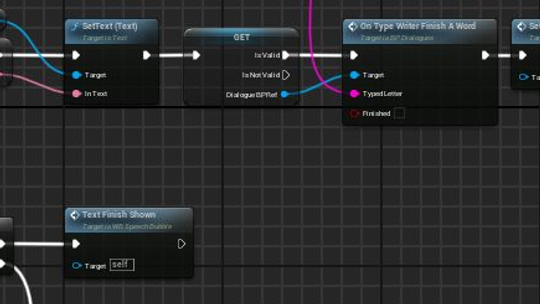
I led the prototype concept, design, assembly and integration in Unity, using agent-assisted scripts and AI-generated placeholder artwork.
Make the research usable beyond one game
We developed a research report and design toolkit alongside Across the Table. I led the English and Chinese game manuals, with digital and print-ready versions.
The toolkit covers participant profiling, pairing, gameplay design, accessibility, facilitation and evaluation. Its Role Assignment Template asks designers to identify what each player contributes and whether the task still works without either player.
Stable-pairing guidance, session tracking and prompts about earlier shared experiences help facilitators plan beyond a single play session.
We developed a research report and design toolkit alongside Across the Table. I led the English and Chinese game manuals, with digital and print-ready versions.
We developed a research report and design toolkit alongside Across the Table. I led the English and Chinese game manuals, with digital and print-ready versions.
First view
Second view
We developed a research report and design toolkit alongside Across the Table. I led the English and Chinese game manuals, with digital and print-ready versions.
Research materials
Role Assignment Template

The jointly developed toolkit includes a blank template for mapping each player's contribution. It asks designers to check whether both roles are needed to complete the task.
Open the full-size blank template in the toolkit
Toolkit by Harvey Li and Yang Yi, OCAD University, 2026.
Licensed under CC BY 4.0.